

In August I applied for a job at a local therapeutic horse riding facility that I previously volunteered at. I thought it could be a good fit given my love for horses and my desire to work with them again. I was excited to be on the right path to bring financial abundance back into my life while doing something I am passionate about.
On the morning of the interview I woke up, took my dog out for a walk, and then went for a run around my neighborhood. I felt clear and ready for the day. I left my apartment at 2:20 p.m., which would give me more than enough time to arrive at the interview before it started at 3 p.m.
By 2:50 p.m., I was making a left turn onto the side road that leads to the facility from the main highway, a turn that I had made a number of times in the past. As I was making the turn, I hit a pickup truck that I didn’t see coming from the opposite direction.
The car I was driving, my mother’s car, skidded off the highway and onto the shoulder of the side road just feet away from where my interview was being held. The pickup truck went into a ditch and flipped over.
Smoke began to fill my mom’s car and I knew I needed to get out. Then a moment of clarity fell over me. I sensed, “Just manually unlock the door and step out.” So I did. Once I left my vehicle, I took a scan of my body. I could see and feel that I wasn’t injured.
With the understanding that I was physically okay, I went over to help the couple who were in the pickup. However, I quickly came to realize that although I wanted to help, I couldn’t. I did not have the necessary skills to assist in a moment like this and I was in shock. I had to step back and let others help. Fellow drivers stopped. People came out of nearby houses. Help seemed to arrive from every direction.
Thankfully, the couple who were involved in the accident were conscious. The driver experienced a serious injury but he was talking and aware. As the first responders arrived, officers began documenting the scene. I emailed the director of the riding facility that I wasn’t going to be able to make the interview.
Other than some bruised ribs and chest soreness due to the airbag deployment, I only had a single scratch. I was given a clean bill of health after being checked out at the hospital. I am very grateful.
Upon my arrival home, an intense wave of guilt washed over me. I was emotionally drowning in what I had done and was incredibly disappointed in myself. My mind entered a relentless cycle of thoughts rooted in panic, fear, and guilt:
“I hit these people. I seriously injured one of them. I crippled their means of transportation. I didn’t see them. Why didn’t I see them when I turned!?”
“I was on my way to a job interview related to an aspect of my life that I am passionate about. Why would this happen?!?! Why can’t I catch a break?!”
“I totaled my mom’s car. HER car, not my own. How much more of my mother’s resources am I going to sacrifice?!?”
“What if I’m sued? I have no financial assets of any kind. I can’t pay for a lawyer and I certainly can’t pay any kind of settlement. Does that mean they will go after my mom?!? This is unacceptable.”
This stream of frantic thought patterns brought me into a state of resentment unlike anything I had felt before. I was emotionally disgusted with this moment of life that I was now experiencing.
After the accident I naturally took care of the insurance-based responsibilities that come with an experience like this. That was all I could control. I could do nothing else but wait as the dust settled from this intense experience. But in my overwhelmed state, “waiting” was an unacceptable notion. Because of this, I sank deeper into my unconscious thoughts.
I felt my resentment toward life choking my nervous system. I remember sitting on the couch with my arms pressed tightly against the sides of my torso and my hands tucked into the center of my chest. I was desperate to feel some sense of security and safety.
I also began to project my resentment onto others. I experienced such jealousy and anger hearing about how other people are progressing with their lives. But here I am, living as a cultural cliché: 40 years old. Single. Living at home with my mom. Unemployed. No financial assets. No prospects of any kind.
At the height of my self-loathing, I found that I became increasingly obsessed with controlling my external environment. I was desperate to have some grip on my life. When I couldn’t control something, I would spiral deeper into this unconscious behavior and redirect it toward other areas of my life. I was emotionally burning out.
Eventually, after opening up to others, I gently asked myself the following question:
Do I want to live a life of self-loathing or do I want to seek the lesson my present circumstances are trying to teach me?
As I navigated this question, I remembered that I needed to give myself grace. Looking at the parts of myself I least wanted to face wasn’t easy. It required patience and even more self-compassion. I also needed to remember that I could move through what was in front of me, even if I didn’t yet understand where it was leading.
I will become more because of this challenging time.
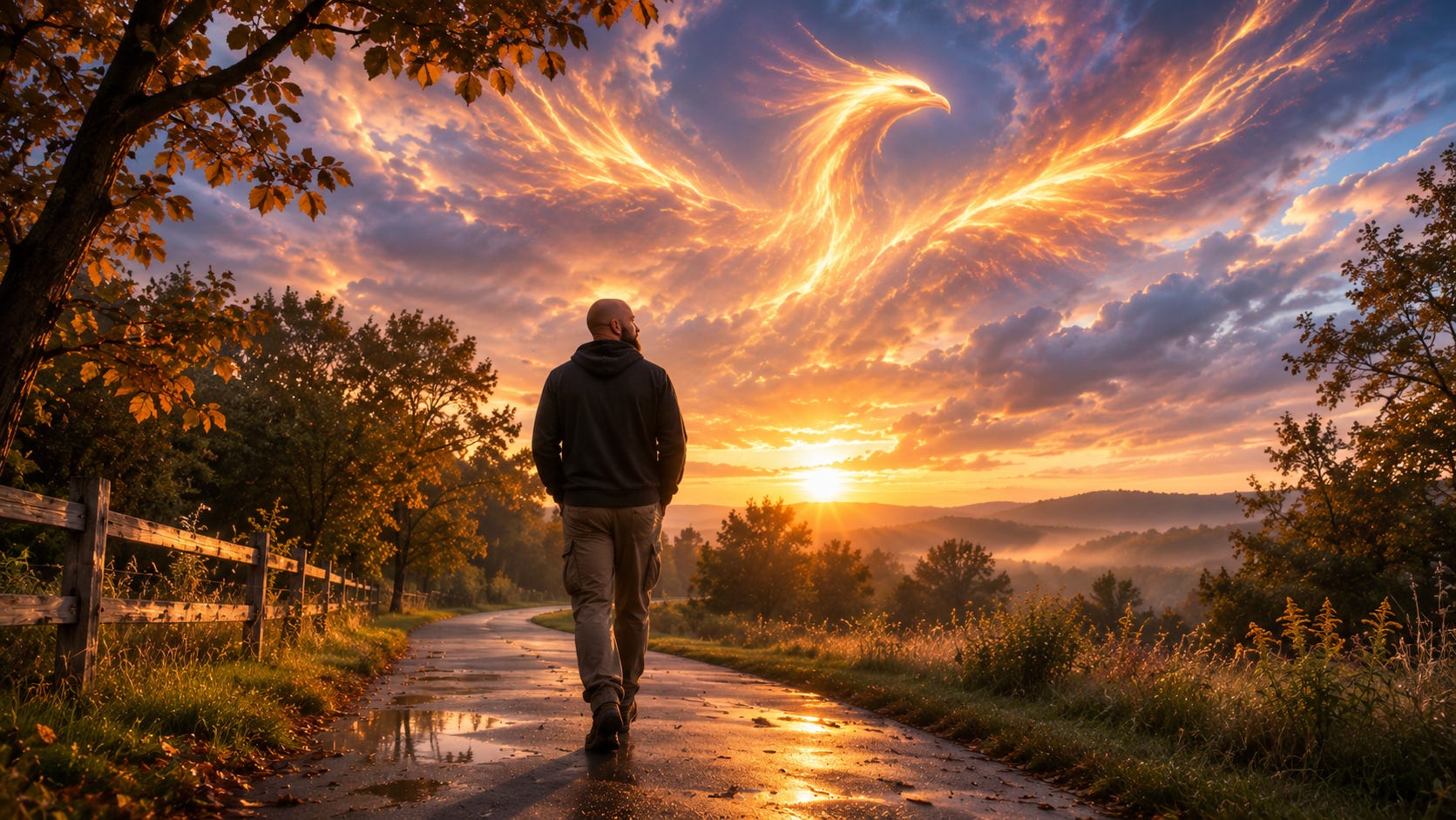
One afternoon in September I decided to go for a walk. It was a nice day with a bright sun and big blue sky. I found myself wrestling with the circumstances of my life again. I began my inner-tirade of self-loathing and thoughts of resentment.
Then I felt a noticeable sense of emotional exhaustion wash over me. I remember stopping in the middle of my walk and saying out loud:
“I have no idea what is happening or what will happen next with my life. I have no control at all. What am I supposed to do if I’m not supposed to do anything?”
I became silent after saying this. I felt an unmistakable energy of acceptance enter my being. It felt so odd at first. I thought, “Why would I accept that I have no control?”
Then I let go of that question and surrendered to the energy of acceptance. In this moment I felt a gentle sense of safety and security. This sense was like a warm blanket on a cool night. Refreshing and reassuring.
As I continued to cross this threshold within myself, I began to realize that acceptance was another doorway—one I had resisted stepping through for most of my adult life. I was being asked to trust at a deeper level than ever before.
Earlier I wrote about my experience while at the scene of the accident:
“I had to step back and let others help. Fellow drivers stopped. People came out of nearby houses. Help seemed to arrive from every direction.”
This moment from the accident was one of the major lessons being presented to me at this time in my life. I had to let go of control, step back, and trust that the unknown would be cared for without me intentionally taking action. By accepting this understanding, I opened myself up to receive the support I required and to focus on other aspects of myself that were ready to be released.
By allowing myself to trust more openly, I began to access deeper levels of guilt within myself. My primal fear of making mistakes and being persecuted for them led me to understand the intense self-persecution I had subjected myself to throughout my life.
By the end of September I found myself practicing an affirmation after going for a long walk or run. I would say:
“I am a good man. I am safe. I can forgive myself.”
I would repeat that a number of times while I was out in the world. Not mechanically, but with a sense of reverence. Essentially, I was teaching the wounded parts of my unconscious the reality of who I am so that I could begin to grow beyond punishing myself for mistakes I had made in the past.
And then came the second major lesson from the experience of this car accident, self-forgiveness. Yes, I made a major mistake, but it wasn’t intentional and I never denied responsibility for what occurred. Beating myself up about it 24 hours a day was a form of self-punishment that I had grown accustomed to in childhood. This way of penance was no longer a system that I could support.
Self-forgiveness became the bridge I crossed to reclaim and remember my innocence. I no longer needed to compromise myself through self-punishment because of the mistakes I’ve made. I am responsible for what happened, but I do not need to punish myself for the rest of my life.
Over the last month, I have watched challenging circumstances in my life be met with safety, support, and beneficial solutions. When I find myself moving towards thoughts of guilt or self-punishment, I center myself and remember that I am supported by the unknown.
Because of this, I am finding that new opportunities are coming to me that align with my heart’s intentions. The skills I have gained throughout my life are being put to use again. I am hiking again. I am writing again. I am not only taking life one day at a time, but occasionally, one moment at a time.
The past is over. The future is unknown. The present moment is all I have, and it’s where I choose to remember who I am. I am worthy of a good life.
So where do I go from here? What’s next for Matt McGee?
Well, I think I’ll take my dog for a walk.
Thanks for reading!
Matt