

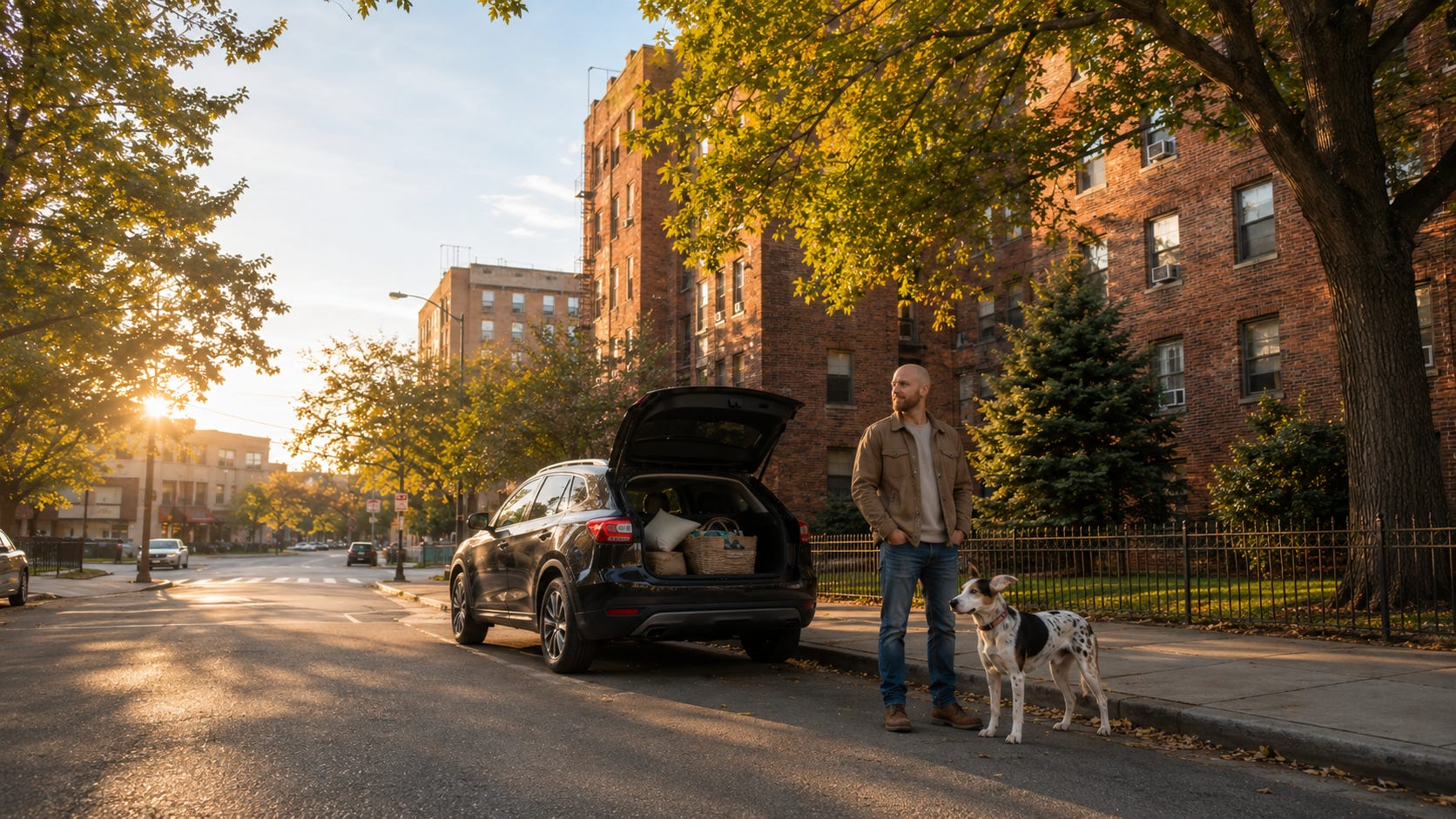
The Call to Leave
When I returned to New York in the summer of 2022, I wanted to leave immediately. I quietly carried a great deal of shame within myself during this period of my life. Being 36 years old and having to come back to my childhood home was not an easy reality to accept.
Looking back now, I understand that the three-year period I spent in my childhood home was a time of transformation. Returning there gave me the opportunity to revisit the emotional wounds from my past and meet earlier versions of myself with greater compassion.
By early 2025, my mother placed the apartment on the market. Pretty quickly, we had an interested buyer, and the process of moving was underway. At first, I felt slightly trapped. I was moving because I had no financial means to live on my own. I could not control when the apartment would be sold, how long the closing would take, or what complications might arise. I could only control the practical details.
I began to accept that this was the journey I needed to take. The move was something I had wanted for a long time, but it would unfold how it needed to, not how I wanted it to happen. I eventually had to surrender to this unseen process.
The Pull of Familiarity
I was open to moving. The number of people, the constant noise, and the density of life in New York began to weigh on me. My hometown and the building where I grew up were also changing. New construction, crowding, neighborhood tension, and ongoing conflict within the building made the environment feel increasingly combative.
However, New York also presented me with an important lesson. I had to learn not to absorb every disagreement, noise, or conflict around me. Most of the drama had nothing to do with me, even when I could feel it in my surroundings. I found sanctuary in stillness amid overwhelming external stimulation. That became one of New York’s greatest gifts to me.
Still, I found that a part of me resisted leaving.
The resistance was not really about believing I should stay. It came from my comfort zone. I knew the apartment and the neighborhood. I knew the rhythm of coming home from work, walking Joy, making something to eat, watching a movie, and doing it again the next day. This comfortable routine had become stagnant and mechanical, but it was familiar, so my nervous system still perceived it as safe.
As the closing date approached, I occasionally thought, “You are not going to have this anymore.” And that was true. I would not have the same routine and physical surroundings. But I was emotionally, intellectually, and spiritually ready to move forward. I realized that I was not resisting the future. I was resisting the loss of familiarity.
Unpacking the Past
A childhood home holds more than walls, rooms, and furniture. It holds the consciousness of the family that lived there.
As the move became real, I stopped seeing the apartment only as a physical space. I saw the bathtub where I gave my dog baths. I saw the stove where we prepared Thanksgiving dinners. I found old photographs showing furniture that had been there in the early 1990s, and I remembered what it felt like to be a child in those rooms.
I found that memories appeared when they needed to, but I did not feel compelled to remain inside them. Some memories brought appreciation. Others required compassion for the difficult periods our family experienced in that home. I could celebrate the wonderful moments without denying the painful ones.
One memory that surfaced involved the end of my alcoholism and the beginning of my sobriety. That transition had occurred in this home, and it became a reminder that I had experienced profound transformation before.
Grief appeared too, but not always in the way I expected. The apartment had often been a sanctuary after difficult events. I would return there without knowing how to process what had happened.
When those memories surfaced, I tried to meet my past self with compassion. I would look back and say:
“You went through something difficult. You did not know what to do with it at that time, but you survived and have been given the tools to process these difficult moments from your past. You are safe.”
Some of the grief involved relationships that no longer exist in the same form. I had to accept where those relationships are today while remaining grateful for the love that once existed within them. I began to understand that grief was not only about what had been lost. It was evidence that love had existed.
The person leaving the apartment was no longer the person who had once felt trapped inside of it.
The Last Walk Through
Walking through the empty apartment of my childhood home for the final time did not feel somber. It felt complete. I acknowledged this completed cycle by taking pictures because I had never seen the apartment empty before. I looked around and felt certain that the process had ended exactly as it needed to.
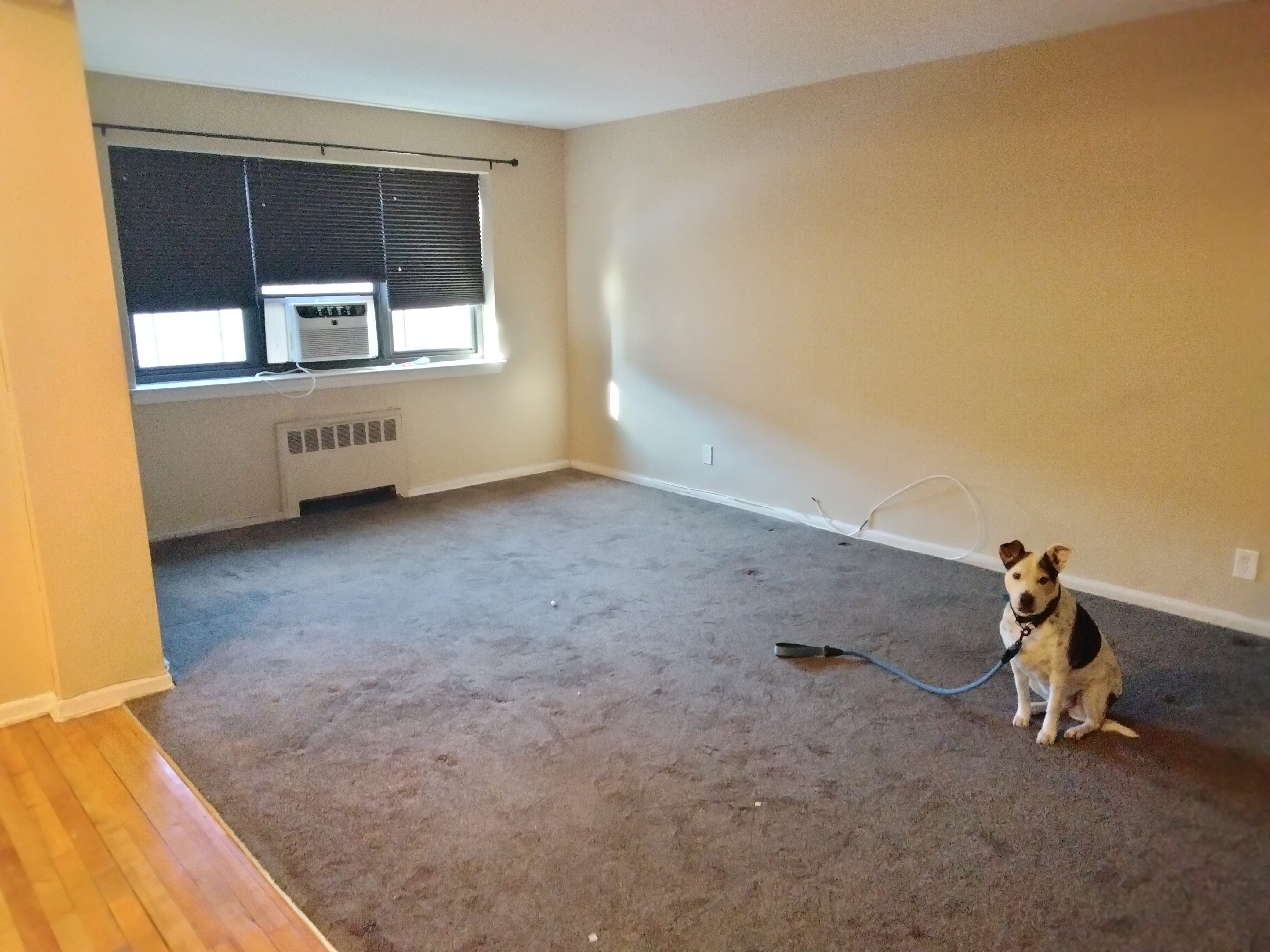
At this point, I had already spent months reflecting on the apartment, the family that lived there, the experiences we shared, and the identities I had carried through those rooms.
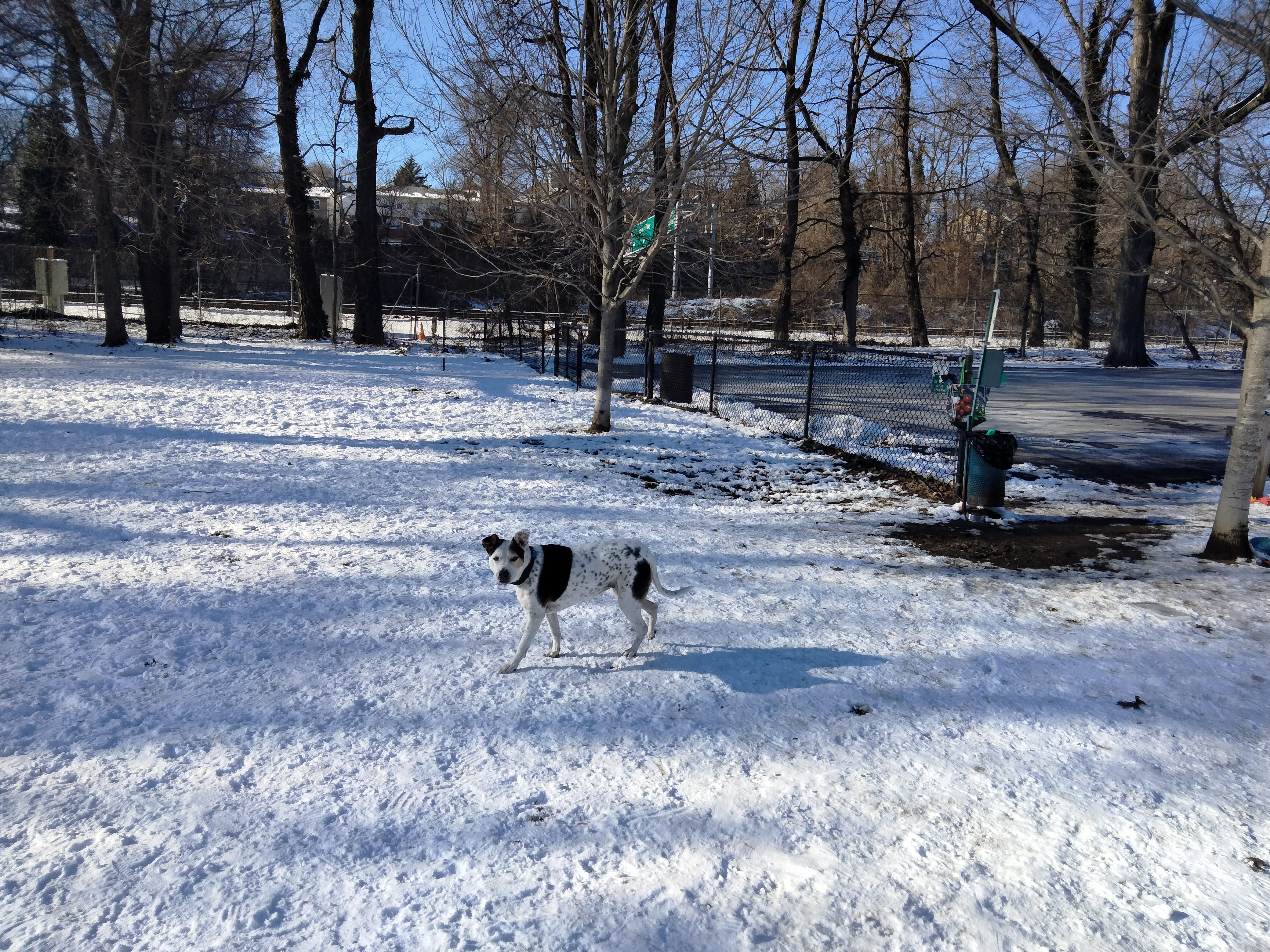
That reflection allowed me to release what I no longer needed while still honoring what the home had given me. The adventure was continuing, and I was ready to get in the car for a much-needed road trip. However, before hitting the road, Joy and I went to one of the parks we both spent a great deal of time exploring while living in New York. It felt like the right thing to do.
While there, we took our normal route, played in the snow, and I expressed my gratitude for what the park had given us over the last few years.
The Space Between Homes
The journey from New York to Indiana brought me a sense of freedom that I had not felt in a long time. The route through Pennsylvania gave me hours to experience the movement from one life into another.
As I drove into the evening, the sky stayed beside us in shades of pink and orange. Joy was in the back of the car. We stopped when we needed to, walked around truck stops, and continued without placing too much pressure on the schedule.
My mind began bringing old thoughts and memories back into my awareness. Specifically, thoughts related to powerlessness. When they appeared, I reminded myself that they were not happening now. I was driving through Pennsylvania. I focused on being present.
The past could try to follow me as a thought or memory, but it could not accompany me as a present reality unless I continued giving it that power.
A New Rhythm
My first emotional response to Bloomington was simple: this is great.
As I drove through town, I felt the energy of Indiana University and the surrounding community. I had always been drawn to university environments and the exchange of cultures, experiences, and perspectives that happens within them.
Bloomington was new, but it was also somewhat familiar because I have extended family in Indiana and had spent time in the area before. That familiarity offered comfort, while the permanence of the move invited exploration.
When I arrived at the apartment complex, I parked directly in front of the door. I walked inside, looked around, and immediately felt that the space was right. I was also exhausted, so I got my bed together, took Joy for a walk, ate something, and went to sleep. When I woke the next day, the feeling of home remained.
Bloomington moves at a much slower pace than New York, and I mean that as a compliment. It is a college town, so there are still people arriving from across the country and the world. There is energy, culture, and movement, but the atmosphere feels lighter.
Beyond the town is farmland, open space, and a rhythm of life that does not demand constant alertness. New York taught me how to detach while surrounded by noise and stimulation. Bloomington gives me an opportunity to live from that detachment without having to work so hard to maintain it.
Nature is also more accessible. Parks are nearby. In my experience, people here seem more comfortable around animals and more aware of how dogs communicate through body language. That has made life with Joy feel more peaceful. My new home matched many of the things I had been looking for.
Accepting Stillness
I have now been living in Indiana for seven months, and the transition has brought several emotional wounds back to the surface, most notably anger and disappointment about the current state of my life.
Those feelings began surfacing shortly after I arrived in January, when a major snowstorm moved through the area. Between the snow, the cold, and my need to find work, I experienced something close to spiritual solitary confinement. I could not explore my new surroundings in the way I had imagined. Instead, I had to remain still.
What came up for me during this period of frigid stillness was impatience, fear, distraction, and a familiar feeling of powerlessness. I found myself wondering why I had to keep waiting for the next step in my journey to arrive.
For much of my life, anger and disappointment have been my automatic responses to uncertainty. When that happens, I begin to believe that I am a victim of my circumstances or that nothing will improve. From there, I can convince myself that poor habits are acceptable.
However, on one particular day, rather than dwelling in those types of thoughts, I got in the car and went for a short drive, came home, and worked on my résumé. Later, I watched a documentary and allowed myself to be still.
I did not need to solve my entire life that evening, nor could I.
This experience reflected one of the central lessons of the move from New York to Indiana. I could participate in the process, but I could not truly control it. At some point, I had to trust the movement of my life.
Learning Not to Know
Certain aspects of my life have come to a close. My job search is not yielding the results I desire, and I currently feel disconnected from the more active life I want to be living. This leaves me asking familiar questions: Where do I go from here? What am I supposed to do? How do I make something happen?
Admittedly, I have allowed the perceived need to answer those questions to overwhelm me. I am beginning to understand, often reluctantly, that I need to stop focusing so much on finding the answer and begin experiencing the present moment without attachment.
The move from New York to Indiana taught me not to cling to a process I cannot control. When I loosen my grip on safety, comfort, and certainty, I create space for life to unfold in ways I may not yet understand.
Perhaps that is what this new chapter is really asking of me.
This new soil is not only Bloomington, Indiana, or wherever else I may eventually find myself. It is within me. I am learning to plant my roots more deeply within myself so that wherever life takes me, I can meet it with greater compassion and trust.
I do not know what this new grounding will allow me to become.
For now, I am learning to trust the process.
Thanks for reading. Have a great present moment!
Matt
Editor’s note: This article was adapted from a Planet Phoenix episode transcript and edited by Matt McGee with assistance from AI.